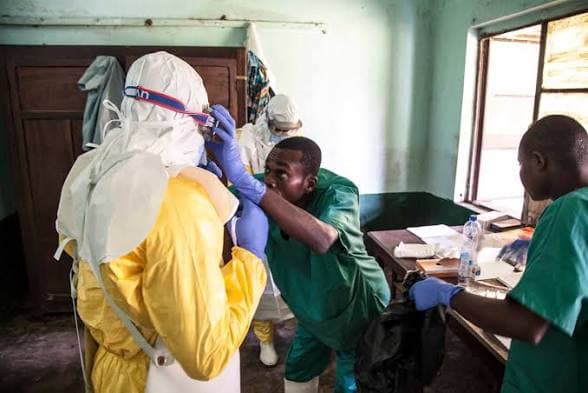
The United Nations has raised alarm over the growing economic impact of the ongoing Ebola outbreak in Central Africa, warning that the crisis could cost the continent up to US$3.6 billion if swift action is not taken to contain the disease.
According to a new assessment by the United Nations Development Programme (UNDP), the outbreak is no longer just a public health emergency but a major socioeconomic threat capable of disrupting livelihoods, trade and economic growth across Africa.
The outbreak, caused by the Bundibugyo strain of the Ebola virus—which currently has no approved vaccine or specific treatment—has infected 1,307 people and claimed 377 lives since it was declared on May 15 in the Democratic Republic of Congo (DRC). A small number of cases have also been recorded in neighbouring Uganda.
The UNDP estimates that if the outbreak remains limited to the DRC and Uganda, Africa could still suffer economic losses of about US$1 billion. However, if the virus spreads to additional countries such as Rwanda and Angola, while global fuel prices continue to rise, total losses could reach US$3.6 billion.
The report also projects the loss of approximately 328,000 jobs and warns that nearly one million more people could be pushed into poverty, with women, informal workers and vulnerable households expected to bear the greatest burden.
The United Nations is urging African governments and the international community to intensify surveillance, strengthen healthcare systems, improve cross-border coordination and mobilise emergency funding to contain the outbreak before it escalates into a wider humanitarian and economic crisis.
Health experts say rapid intervention is critical to preventing the outbreak from reversing development gains made across the continent in recent years.