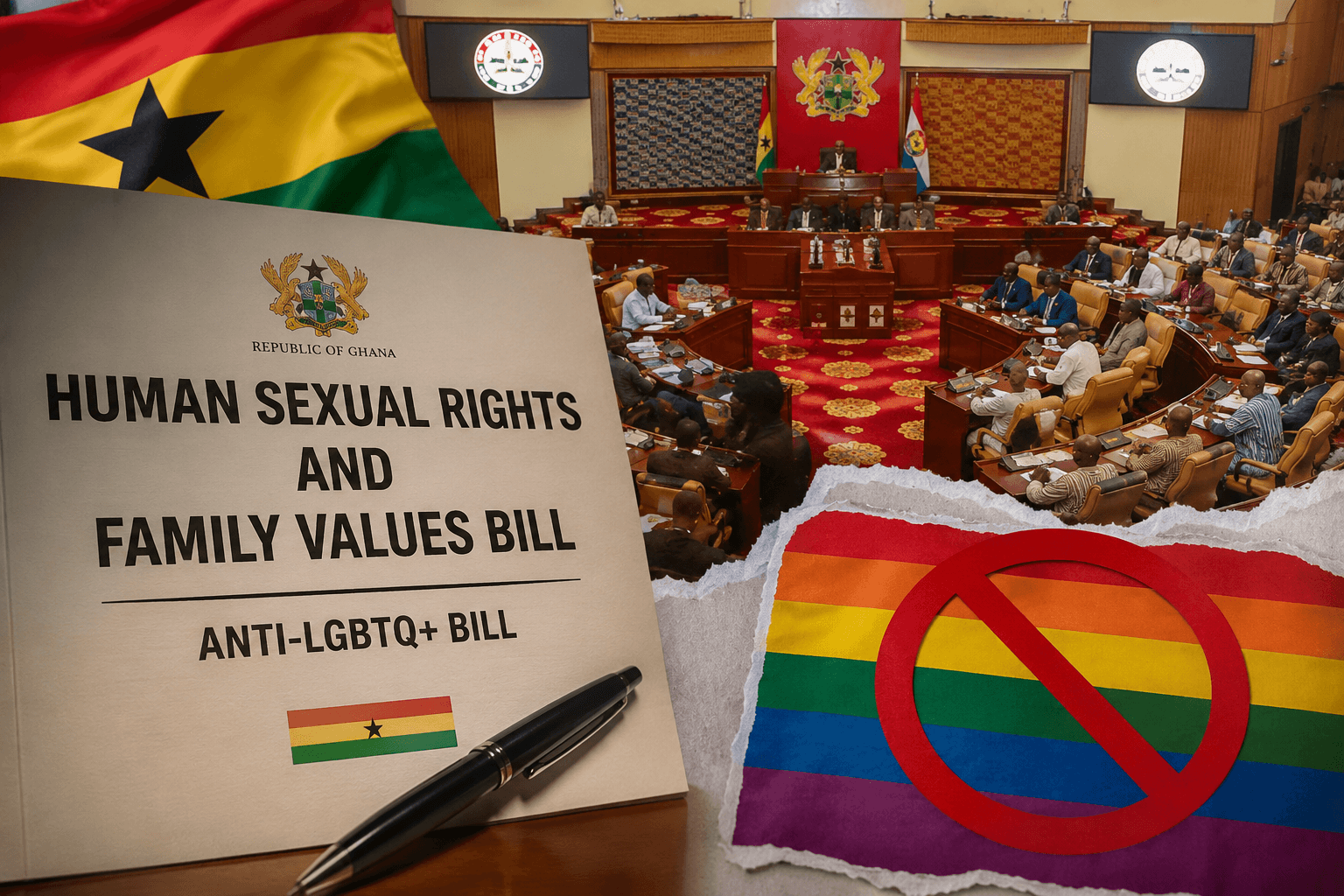
The Parliament of Ghana has passed the Human Sexual Rights and Family Values Bill, widely known as the Anti-LGBTQ+ Bill, marking a major and controversial milestone in the country’s ongoing debate over LGBTQ+ rights and cultural values.
The legislation seeks to regulate what lawmakers describe as “proper human sexual rights and Ghanaian family values,” and introduces strict penalties targeting same-sex relationships, LGBTQ+ advocacy, and related activities. The bill has been one of the most hotly debated pieces of legislation in Ghana in recent years, reflecting deep divisions within society over morality, religion, and human rights.
Key Provisions of the Bill
The bill reportedly includes several strict measures, including:
* Criminal penalties for individuals engaged in same-sex relationships * Jail terms for those who promote or support LGBTQ+ activities * Restrictions on advocacy groups and organizations supporting LGBTQ+ rights * Provisions requiring citizens and institutions to uphold “family values” as defined by the legislation * Limitations on public expressions of same-sex relationships
Supporters of the bill argue that it reflects Ghana’s cultural, religious, and moral values, and is necessary to preserve the traditional family structure.
Support and Opposition
Proponents, including some lawmakers and religious groups, have praised the bill as a defense of Ghanaian cultural identity. They argue that it aligns with widely held social and religious beliefs in the country.
However, the bill has faced strong criticism from human rights organizations, legal experts, and international observers. Critics argue that it violates fundamental human rights, including freedom of expression, privacy, and equality before the law. Organizations such as Human Rights Watch have described similar versions of the bill as discriminatory and harmful to vulnerable communities.
Political and Legal Uncertainty
Although Parliament has passed the bill, its future is not yet fully settled. Under Ghana’s legislative process, a bill must still receive presidential assent before becoming law. Previous versions of the same legislation have stalled or expired due to political transitions and legal challenges.
The renewed passage of the bill continues to generate intense national and international debate, with concerns that it could affect Ghana’s global partnerships, human rights reputation, and access to international funding.
Conclusion
The passage of the Human Sexual Rights and Family Values Bill represents one of the most significant and divisive legislative developments in Ghana in recent years. While supporters see it as a defense of tradition and cultural values, critics warn it could deepen discrimination and trigger serious human rights concerns.
As the bill awaits its final legal steps, Ghana remains at the center of a global conversation on the balance between cultural sovereignty and universal human rights.