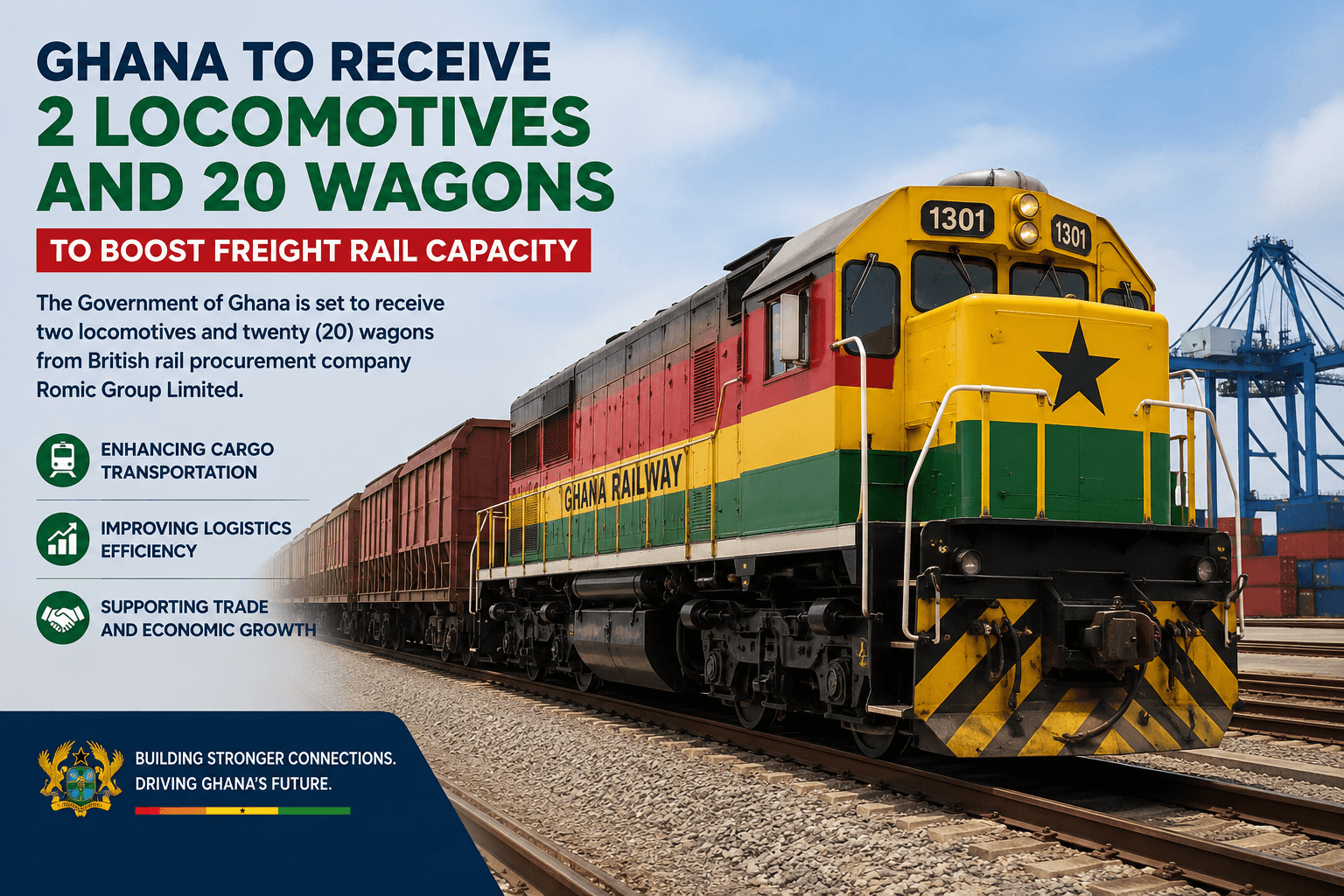
The Government of Ghana is set to strengthen the country’s rail transport system with the acquisition of two locomotives and twenty freight wagons from British rail procurement company Romic Group Limited, in a move aimed at enhancing cargo transportation and improving logistics efficiency across the country.
The procurement forms part of ongoing efforts to modernize Ghana’s railway sector and increase the movement of goods by rail, reducing pressure on the nation’s road network. The new rolling stock is expected to support the transportation of bulk cargo, including minerals, agricultural produce, and industrial goods, while improving the overall capacity of the freight rail system. (Ghaneps)
The locomotives and wagons are expected to be deployed on key freight corridors, particularly the Tema–Mpakadan railway line, which serves as a critical component of Ghana’s broader transport and logistics strategy. The line connects the Port of Tema to inland transport networks, facilitating the efficient movement of cargo to various parts of the country and neighboring landlocked states. (Ghaneps)
Government officials have indicated that the investment aligns with broader plans to revitalize rail transport as a cost-effective and environmentally friendly alternative for moving heavy goods. The expansion is also expected to create employment opportunities within the railway sector while improving operational efficiency for businesses that depend on freight services. (CitiNewsroom.com)
Industry analysts believe the additional locomotives and wagons will help address capacity constraints and support Ghana’s ambition of becoming a major transportation and logistics hub in West Africa. By increasing freight rail capacity, the government aims to lower transportation costs, improve supply chain reliability, and stimulate economic growth through enhanced trade and industrial activity.
The latest acquisition underscores Ghana’s commitment to developing a modern railway network capable of supporting the country’s long-term economic transformation agenda and strengthening connectivity between ports, industrial centers, and regional markets.