Afenyo-Markin Questions GoldBod’s GH¢22 Billion Losses
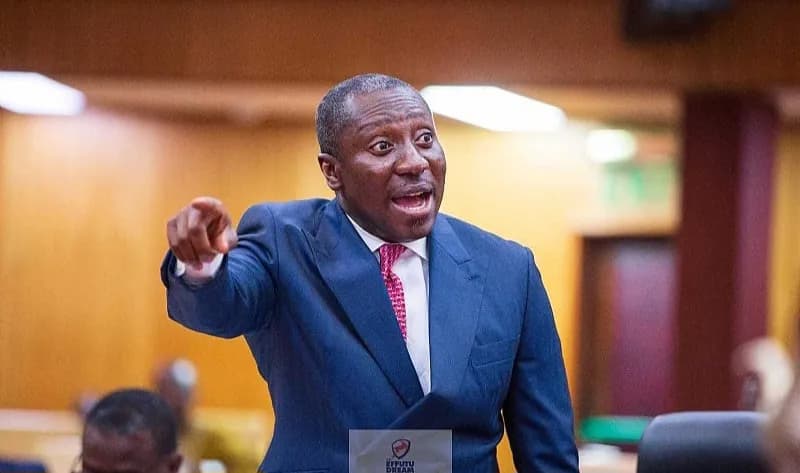
Minority Leader in Parliament, Hon. Alexander Afenyo-Markin, has questioned the government’s handling of Ghana’s gold purchasing programme, following claims that the initiative involving the Ghana Gold Board (GoldBod) recorded losses of about GH¢22 billion within a year.
Speaking on the issue, the Minority Leader criticised the government for arresting individuals over alleged financial losses to the state while, in his view, a much larger loss has occurred under the government’s own gold-buying programme.
“You are arresting people for causing financial losses to the country, but in only a year the GoldBod alone has lost GH¢22 billion,” Afenyo-Markin argued.
His comments come amid growing political debate over the financial performance of the Bank of Ghana’s domestic gold purchasing programme, which operates in conjunction with GoldBod.
The International Monetary Fund (IMF) has reportedly put the losses associated with the programme at approximately GH¢22 billion, equivalent to about 1.5% of Ghana’s Gross Domestic Product (GDP). (RatedNews)
The figure has intensified scrutiny of the government’s gold policy, with opposition lawmakers demanding greater accountability and explanations over how the losses were incurred.
GoldBod was established as part of efforts to formalise Ghana’s gold trade, increase the country’s control over gold produced by small-scale miners and strengthen foreign-exchange earnings.
The government has maintained that the programme is strategically important to Ghana’s economy, particularly in improving the country’s gold reserves and ensuring that more value from the gold sector remains within Ghana.
However, Afenyo-Markin’s remarks are likely to fuel further calls for Parliament and relevant state institutions to examine the financial transactions surrounding the programme and determine the factors responsible for the reported losses.
The controversy also raises broader questions about the balance between using public resources to pursue long-term economic objectives and ensuring that such programmes remain financially sustainable.
As the debate continues, attention is expected to focus on the government’s response to the reported GH¢22 billion loss and whether further investigations will be conducted into the operations of the gold purchasing programme.